Saturday, July 10, 2021

We have a worm! No hope for the marigolds. And stuff.

I had to water today since it's been so hot and didn't get a chance yesterday and I think the day before..yikes!

Put some fertilizer down, likely hedged on the less is more amount but some is better than none. Looking over the tomato and what do my eyes spy?


Not too camouflaged are you?
Probably about an inch long


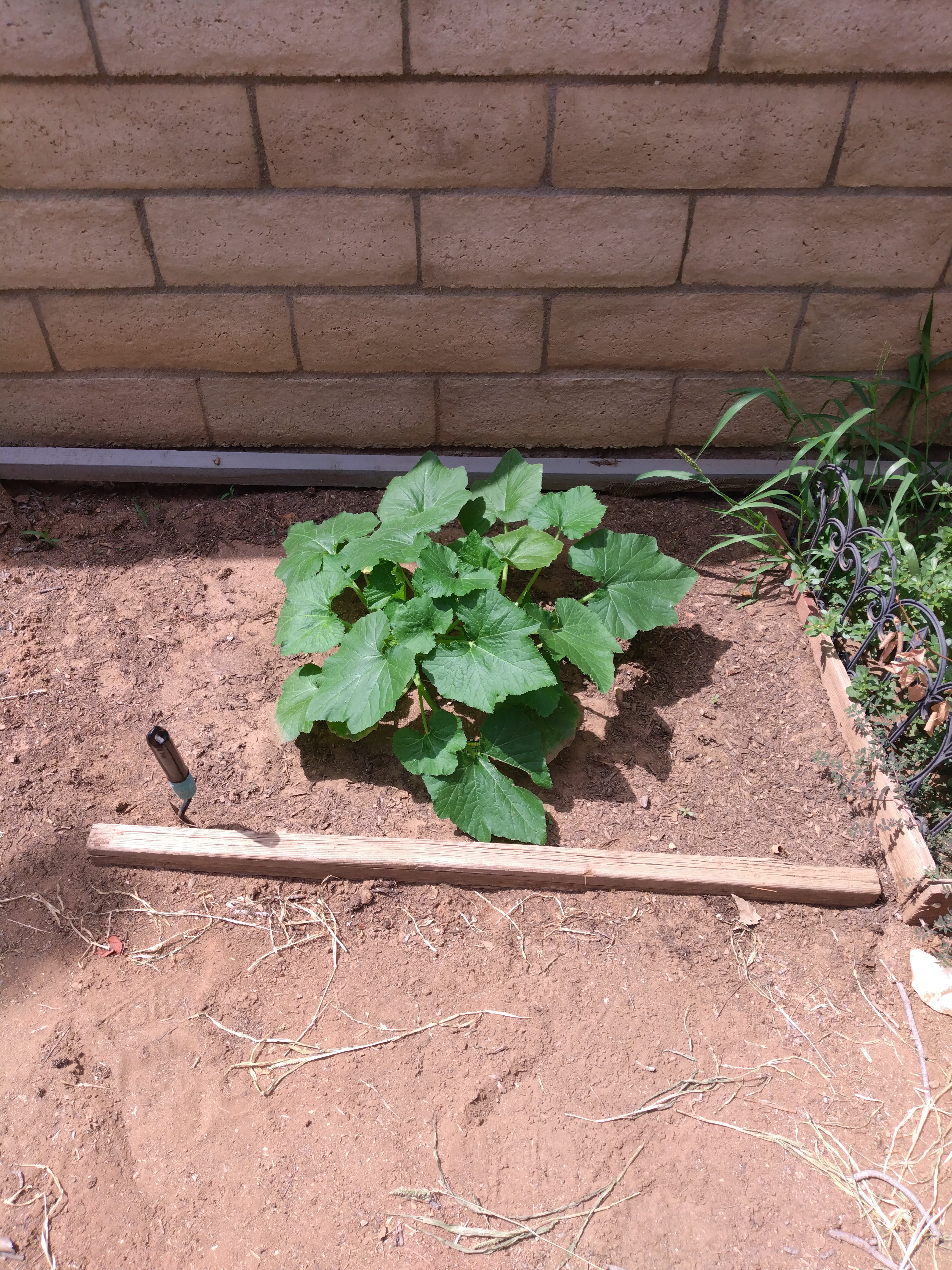
So I gently picked it up with an old plant tag that was lying on the ground and moved it carefully to the purslane/spurge/mint bed. The mint by the way looks like it's being attacked by spider mites..or maybe just mud being splashed on it. Not in the mood to worry about that as long as it doesn't get on my plants. Look how big the zucchini is getting! With definite flower buds, gender unknown.

See the grass hanging over the border on the right? Yeah I pulled those off. Those were grass flower heads with potential seeds and not going to have that in my bed. 

So as dry as the dirt is the marigold seeds don't have a chance. Not going to worry about it and may well go get either marigolds or something to put there. Still don't want to buy a 2 cf bag of mulch to put around the plants. First, I would have to haul it from my car to the garden which I could probably do, but not in this heat. Second, it is likely way too much for the two small areas and lord knows what would happen to it if I just left a half bag of it out for whoever or whatever to dig into it.

Still haven't had a chance to ask about the log pile. I mentioned before that there's a lizard that is using that as a home but I also want to build more beds. That may have to wait until the fall when it's cooler. And by 'Fall' I mean possibly not until November as we get hot weather all the way to October when the second fire season starts.

Because of my plant searches and topics more gardening videos and articles are popping up on my phone google feed. One of them (laughable) is 'Martha Stewarts 5 steps to growing tomatoes at home'. First you need about five gardeners, and at least two actual experts to advise you on what to do. Because let me tell you, first you live in one of the richest mansion areas of the northeast, 'The Hamptons'. Second you are not an expert on anything. I watched her 'Thanksgiving special' where she fixed the food (with three other family members) and showed off her china cabinet and a table that sat fifteen and whatever. So call me a bit jealous or just whatever I don't follow advice from anyone unless they're dealing with the same conditions I am.
Now, that's not to say she likely had five very generic things to do that anyone else could tell you and there are people that just adore anything she does. Go knock yourself out. I opened the article and it's apparently her new series 'Down and Dirty' and first up she is teaching one of the Kardashians how to grow tomatoes. Major eye roll here... heavy sigh, close the article.
 
DISCLAIMER: I am NOT an 'expert' I have my experiences to draw from, usually giving what works from hundreds of people, actual more experienced people and using techniques and products that I personally know works for me. I give anecdotes, suggestions, ideas and bona fide references to things that work. Gee wait a minute..doesn't that make me an 'expert'?
 
This is why you always have to check to see where the person is gardening and their experience doing basic stuff. There are even local gardening experts that I take with a grain of salt because they are basing their experience from what worked fifty years ago. Or more! Gardening and what to use has changed drastically just in the past ten years so using the same methods from fifty years ore more ago may not be necessary.
A lot of people (older immigrants) are going by what their 'gardener' or their father/grandfather tells them they need to use. Manure. 
'I need chicken/steer/cow manure' for what? 'oh going to put in garden for fertilizer'. Um...no. You want to stink up the entire yard and have dogs rolling around in your dirt and digging it up, go for it. Manures are still sold because yes, they are good soil amendments but not in small yards. I usually give up and let them use it. Not my yard, not my problem.
As a component of and combined with other compost and amendments yes.  'My father used this all the time and it was fine'. Of course he did and that was fifty plus years ago from the farm down the road (or his own farm) that didn't feed the cows anything but alfalfa, grass and whatever was processed from the fields. You can't trust any of the manures commercially made unless it says it is from an organic farm which is costly and people don't want expensive 'cow poop'. 
There are several versions of organic fertilizers and soils that have guaranteed organic stuff in it including chicken manure or steer manure. It STIINKS! but it's good sh*t hehe.
Oh speaking of stink, since I started working that bed, the smell has gone away from what whatever was there before. Possibly from the cats not using it anymore so there is that. 

Another note, if you are going to work in the garden, you are going to get your hands and shoes dirty at some point. Something else people (mostly women) have a problem with, 'I don't want to get my hands dirty' well you are putting plants in soil soooo, 'do I have to?' Sigh.
I have realized over the years that as short as my nails are, I hate getting dirt in them and on my hands. I started wearing gloves and it was great. Used to not care until I worked at the nursery then realized gloves good. Dirty, rough and chapped hands is bad. So gloves that fit and protect are good, have a grip on the palm and fingers but dry out quickly. I dislike leather gloves unless I'm using a shovel or other tools. I used to have a pair of gloves from the nursery called 'Foxgloves' they were long gauntlet types from knit fabric and grip bumps on the palm and fingers. Great stuff for general use but not very protective from thorns. Lost those when I was fired.
Oh head protection too! Cranial radiation protection is a must. Lost my favorite hat too.


Friday, July 9, 2021

And the results are in! Surpising to say the least.

 So with all my knowledge and experience this is a surprising result from the soil tests.

The colors don't lie.

So the way these tests work is the darker the color the more of that particular nutrient you have in the soil. From left to right is (Empty pH tube) Nitrogen, phosphorus and potassium (potash). So no discernible nitrogen and the other two are considered 'very low'. Right, then how come I have a plant that looks like this:

June 28 2021

I'm not going to  mess with it if the plant is basically healthy. Will likely put some more food on it this weekend and maybe look for a bag of compost or something to put around the soil to keep it moist and cooler for both plants. I noticed when I was digging for soil samples the back side of the plant (shaded) was still very moist but where the sun pounded on it was bone dry down an inch or more. I may go get another test kit from a different company and try again but fertilizing first and waiting a week is a better idea.

What did I say about using mulch around plants? There ya go.

One thing I am noticing is the leaves are tending to be kind of wrinkled and almost thicker, which is a sign of the nutrient issues I'm having. So for now, not going to do anything but feed it and try to keep the water up a little better. I will likely be able to pick some peppers today or tomorrow depending on the size. JalapeƱos should be about the length of your thumb or slightly bigger. I might leave a few on to ripen to red and see how they taste as well.

If it was cooler I'd plant cilantro (already been there I know) the seeds on the plants in the planter box are almost ready to harvest so I'll likely nip a couple tomorrow if Rocky goes in that direction.

I was in the bookstore earlier and browsed through the home and garden section. This being a Barnes&Noble they usually have a great selection. Not a single Sunset Western Garden Book to be seen so that verifies that they've stopped selling them through retailers at least. The latest edition I could find listed online was 2012 which would be their ninth edition as far as updating goes I guess. The Square Foot Gardening book is out there, all updated and looking new and of course 'Vegetable Gardening For Dummies' which is a fantastic source for basics with a dash of humor.

The Square Foot Gardening book and show has been around since the seventies and is based on 'French intensive gardening'. Where you take the absolute minimum space a plant needs and then space your plants accordingly. So you get tomatoes crammed almost shoulder to shoulder at 2 foot spacing (on center remember) and peppers even closer. I don't like planting that close and thankfully I have the space to do so. It also had a section on 'caging' your garden in various ways using pvc or wood frames with netting or chicken wire to protect the plants from birds. So far I don't have that problem but will see when the flowers up top develop fruit. 

One thing I keep telling gardeners is keep a garden journal. However way you want to do it, paper, electronic, whatever but keep track of what and when you plant, how you water, what the weather is like when you do water, what fertilizer you use....all that stuff. Kind of like tracking your symptoms when you go to the doctor. That way when something goes wrong and you want to consult someone you can say 'I was watering roughly every other day for about twenty minutes and it was penetrating the soil down about four inches. Last time I fertilized was about a month ago and used...blah blah blah blah. 
Instead what I would get is, 'oh I don't know... I watered when it looked dry/water every day like the instructions said... oh I don't remember when I fed it' 'oh am I supposed to feed it? The soil said it had fertilizer for three months' even worse from the English as a second language class, 'Fertilizer? Food what's that?' ::Deep breath and heavy sigh:: 
Or the dreaded (general garden answer) 'oh  my gardener takes care of it I don't know what he does'. ::slow simmering frustration steam coming out of ears::

It's YOUR garden! YOU take care of it. YOU figure out the watering system, you want healthy plants you need to find out what they need. Don't have the time or energy, then put in artificial grass and have a mow and blow company come through and take care of your yard and put your trust and $140/week in them.

I honest to god had a lady say she just wanted pretty plants but didn't want to do any gardening. Then go get artificial ones and spend the same amount of money on high quality ones that don't fade.   Another one wanted a fruit tree but didn't want to really eat the fruit just liked the flowers. Can you see where I'm coming from? Gardening is for those that enjoy being out there and doing things to nurture and improve their yard and their mental health. If you don't want to do that then get  a condo with a balcony four floors up. 

Gardening is also not for high maintenance, anxious, nitpicky type of people that will come in every day asking questions.  One man said he had a particular fungus on his citrus tree, I looked at him and said, how do you know? (The disease he mentioned was a very rare dysfunction and rarely if ever showed up in citrus). We went round and round because he wanted a specific type of fungicide that doesn't exist in California let alone standard retail. We went to the computer and I showed him as he looked over my shoulder, 'not available in stores, cannot ship to California' 'well do you have anything like it?'
(see reaction above)
 
You have to have a borderline hippy type attitude that some things you need to accept as part of having a garden and moderating any incursions of disease or pest with lowest impact possible. You have to be careful though and not go the other direction of 'if it doesn't survive in my garden then it doesn't belong there' attitude. Everything needs encouragement and nurturing to an extent in order to thrive and produce better results. Just like people and pets.
 
Right now I have signs that there's a huge caterpillar on my tomato, have I seen more damage? Nope, therefore it's done chomping and gone to ground, when the plant is dug up later I  may well find the pupa case and can throw it out then. One is not a problem so I'm lucky and didn't go spend money on a product I'm only going to use once or twice. Do I talk to my plants? No, I talk about my plants, I talk about what's going on when I see a problem but I don't name my plants and treat it like a third person or pet. I may be crazy but not that far gone. 
I even have a badge to prove it!


Thursday, July 8, 2021

I'm doing SCIENCE!


The items needed for experiment
 

Distilled water in the background, test kit capsules (more on that later) jar with soil and distilled water for nutrient test, and green vial with reactant, soil and water already mixed, waiting to settle.

Now for this I used a typical 1qt (four cup) canning jar (wide mouth is better but I had none available) and used 1/3 cup for measuring. It needed 1 part soil and 5 parts water. More than enough water to use for nutrient tests. The capsules were in individual bags sealed in a mylar recloseable bag.  The reason being that the little capsules are not typical non biodegradable plastic. You can dssolve these in water. Bad choice considering as the items were processed there was just enough moisture that it sealed the capsule together. I had to use a fine pointed sharp knife to get the pH powder out.


Green is okay
What color say you?

So, as expected soil in San Diego is typically on the alkaline side, how much so is depending on amendments as I've mentioned before. So luckily tomatoes are very forgiving and can tolerate alkaline situations with no problems. As evidenced by my thriving and green tomato and pepper. 

This is also a good test for soil composition. It's obvious in the jar a good amount of separation already with organic matter floating at the top, water, then sediment, clay and sand/rocks.

Settle down now.

 The reason the pH test and nutrient test are different is the type of reactant and size of soil sample. pH in lab tests for old time science used 'litmus paper' that you dipped in the solution to determine how alkaline/acid something was. I never took chemistry in high school or college, too much math and scary chemicals.

The instructions said for vegetables to take a sample about 4" down. It is helpful to have a trowel used for digging bulbs around because it has measurement marks on the blade (yes that is what the digging part is called). I used a scoop that I found and just did my best guess, typically 4" is about the depth of your index finger. I took my samples close to the tomato on both sides and mixed the soil, so you can see the floaty bits at the top. That was done about a half hour ago and still waiting for it to settle a bit more. Instructions said that depending on soil composition it could take 30 min to 24 hours. I can wait (that's a small dish of baking soda in a little water as a paste for putting on a few mosquito bites I got on 4th of July).

So while we wait, going to talk about how a bad infestation of beetles or other burrowing insects can be on trees. These pictures were taken on my walk through Balboa Park.


This is a eucalyptus tree that was cut down likely due to sustaining the damage you can see on the trunk. Those are the tracks of beetle larvae that likely infested it over many years. Eucalyptus are not native to the U.S., they were imported as building wood for railroads and structures. It was discovered that the wood is highly volatile and has too high an oil content, shatters easily and is generally not good lumber. So now we have millions of trees that create a fire hazard, branch falling hazard and have their own problems from pests and diseases. 
Just yesterday I was pulling into my parking spot at home and a branch from the neighboring tree fell down on the fence. It wasn't very big and was out of the way but it could just as easily have been something larger.
Also they release a tannin much like pines, oak and mangroves that create a 'no grow zone' under them from the leaf litter breaking down. They also suck up a huge amount of water and were used in Australia for clearing swamps (or so I was told). 
When we had the huge firestorm about fifteen years ago the euc's that survived the fire best were ones in a yard or area that had accessible water. They were well hydrated and therefore the tree had less chance of going up like a torch with the high oil content of drier wood.  

Meanwhile back at the lab:
Not so clear water for nitrogen


I haven't put any of the powder in yet. I did though and shook it up, with less than expected results. Going to wait a bit longer but the instructions say results should be within minutes. 

Just about zero nitrogen.


Hmmm this is highly unlikely. The sediment is still settling but the color does not look promising. I will wait and do another test tomorrow after the water has settled more. Will do all three nutrient tests then as well.

Science! Sometimes you get results you didn't expect and have to try again. Not because you want a different answer but you need to get multiple samples to make sure that your testing is done correctly. Iiinteresting!

 "In scientific reasoning, a hypothesis is an assumption made before any research has been completed for the sake of testing"
 
So scientific hypothesis: My plant is growing like gangbusters, the leaves are wonderful green and healthy, flowers are now more prolific but still no fruit.  Supposition: Higher nitrogen in the soil.
Initial testing of the soil is inconclusive and indicates actual deficiency of nitrogen. In order to ensure accuracy of results, more tests are needed to compile more complete data.


Wednesday, July 7, 2021

It's haaaht, watered with the sun out, interesting plants.

Had to go out and water despite it being after 11am and full on sun. These were taken after I even watered down the plants themselves.

After reading an article about why a tomato plant would put out phenomenal growth and few to no flowers is a sign of too much nitrogen...yep that's what I've got. Just have to get some distilled water so I can do the soil test to confirm.

Other than that, everything is hunky dory plant wise. Not expecting anything from the marigold seeds, they could be sterile for all I know but might get some plants just for the heck of it. 

I took pictures of some plants a week ago and never got a chance to show them off or talk about them. But first.. another pest.

Signs of Bougainvillea Looper


Yeah that poor bougie is being just chewed to bits and once again it is a small caterpillar that is the same color as the leaves so very hard to find. There is one product that I know that will knock it down a bit and that is Spinosad (mentioned this before for other caterpillars). Unfortunately this being a commercial property it's hard to make any suggestions to the manager or yard guys about it.


Giant Bird of Paradise

Strelitzia nicolai. This is the monster one that can get 20-30 feet tall. This one is only about 15-20 considering that is a seven foot wall behind it. This is the bane of any foundation or sidewalk if planted too close. Firstly due to how it expands at the base and secondly the nectar that oozes from the flowers waaaaaayyy up there at the base of the leaves on that tall part. Wonderful tough plant, doesn't need much care and gives you that nice jungle feel. Right.


This is a little epiphyllum growing in a pot in one of the main planter areas near some roses and under a sycamore tree. It could be any number of hybrids out there but the flowers are smaller than the palm of your hand which is unusual for an epi. Cute little thing and blooming just wonderful in it's location.

That's pretty much it for today. Mind is on other things right now and can't think of a garden tip or topic at the moment. Only thing actually is, start seeds in containers of some sort unless you're planting root crops. Easier to keep them watered and monitored.


Monday, July 5, 2021

I has a tomato and... an invader

So, about a week or two ago I noticed holes in some of the lower leaves. I mentioned it before, but now after inspecting the plant again this evening evidence that the little invader has gotten bigger.

Old and new damage

 So the issue with this particular critter is they are exactly the same color as the stems and leaves. Very very hard to find them unless you go over the entire plant like looking for fleas on a black cat. Never did find the little chewer but I did find this!

I has a tomato!
The  leaf on the right is blocking a much smaller baby tomato. This one is about a third of the way up from the bottom of the plant so I carefully pulled a few of the leaf branches off to make sure it gets enough sun.
 
Oddly enough when I went for my interview today at Lowes I picked up a soil test kit.

 This kind of test is the more accurate one that uses water and a powder that reacts with the soil in the tube.  Depending on whether you are testing for the three main nutrients or the pH you use just soil and water for the pH and a suspension of soil and water for the nutrients. I will be doing that tomorrow because for the nutrients it's preferred you use distilled water that is absolutely neutral. It comes with instructions and a chart/list that gives suggestions on what plants need in terms of nutrient levels and pH. 
The tomato is going gangbusters of course with growth and just enough flowers to say it's making an effort. Don't know why I thought it would have more but I've never had a tomato get this big and full so I'm still thinking it's a big high on nitrogen.
 
I need to start thinking about what to plant next when the tomato is done. Technically I should not put another tomato in there immediately, that will sometimes invite nematodes. Microscopic worms that burrow into the roots of a plant and completely drain it of life. Not good. 
 
There was a regular customer that came into the nursery who was trying her darnedest to grow tomatoes. She had only a few hours of sun (2 or less) and wanted to do them in the ground. I asked if she had an area that got more sun, yes so I told her to grow them in containers. She whined and balked and did what she wanted anyway. Nice enough lady but she was a bit too whiny and stubborn. Well lo and behold after about the third year of growing tomatoes in this plot, every year in the same place, her plant start to fail. Not growing as big, not producing as much... all the signs pointed to nematodes. Sure enough she took a soil sample to the agriculture department and bingo, she's got root knot nematodes.
'What should I do?' 
'Don't grow tomatoes in that spot ever again. Not even zucchini or peppers... you have to grow in containers'
The whining commenced, asking if there was anything to do, how did it happen, denial denial.
I gave her all the things you can do to the soil to help either chase them away or kill them outright (which isn't easy) and kept saying, you can't grow tomatoes in that spot in the ground for at least a year. She whined and pouty faced but I had been dealing with her for five or six years at that point and gave her the 'I'm the expert don't even try it' look. I don't know if she ever followed my advice or not.
But the other reason to rotate crops is tomatoes suck up all the nitrogen in the soil and if you don't fertilize and replenish the soil in between crops you start ending up with deficient soil. Another reason to get a soil test kit is end of season testing.

So anyway. It's exciting I've actually got a fruit or two and bet you bottom dollar that little invader is going to find my nice baby tomato and drill a hole in it. Some of the new damage was at the top of the plant so I'm hoping that it doesn't travel far and stays up there. If it is a Tomato Horn Worm it is actually from a moth. I'm sure you've all seen the caterpillar but how about the moth?
 
White Lined Sphinx Moth

So these are obviously a moth but actually do fly during the day, about as long as your little finger, not a small moth. They are nectar feeders and probably about ten or so years ago there was an amazing weather situation where it caused a huge hatching of these moths in San Diego. There were almost clouds of them on anything that had flowers. They were usually seen around dusk but sometimes during the day. So guess what happened after that? Yup dozens and hundreds of the caterpillars all over anything they felt like eating. They aren't restricted to tomatoes by any means and I hope I still have the picture I took of about ten caterpillars that we found in one sweep of the nursery plants. Not a one was smaller than my thumb.

They are important pollenizers so keep that lantana and chive flowers going as well as verbena and alyssum. Even some ornamental bushes like Indian Hawthorn where I saw them fluttering that year are good for not only bees but these moths as well.

Okay so I took some pictures of some interesting plants that I saw in the garden center since I got there early. One of the new varieties of dwarf lantana and one of my favorite cuphea varieties. 


The one on the left is a white and yellow variety called Luscious© Royale PiƱa Colada and the one on the left is Bandana© Rose. They only get about 2-3 feet tall and wide so they're great for small areas when you want to plant for butterflies, hummingbirds ::tight almost angry voice:: and other pollinators. ::smile::


I didn't get the name of the cuphea but it is a hybrid of Cuphea ignea and possibly Cuphea cyanea. Sometimes growers will put a new plant into planters and sell them the season or year before the plants are actually available by themselves. Very frustrating for when people want to buy just the one plant. There wouldn't have been a tag in the pot anyway since the grower probably brought it in that way. It is pink with a yellow tip on the face (in the same arrangement as the 'Cigar Plant') and an absolute draw for hummingbirds. You can see that it is dropping the flowers entire when they are spent so a bit of mess but not so much if it's in the ground.
It is growing very nicely with a type of cordyline in an arrangement called 'fillers, thrillers and spillers', although the thriller here is the cuphea and the filler is the cordyline. 
 
So a little insect trivia and plant information. Hoping the green monster in the tomato is almost ready to drop in the ground and pupate rather than chowing down on my plant.
 

Sunday, July 4, 2021

Looks like a watering schedule has been established

 I watered on Friday and then again today being Sunday so in this heat with my soil unprotected, the beds need watering about every other day. Which is a good stretch, not too wet and not too dry but still no tomatoes!

Healthy and growing good!
 
Peppers almost ready!

I checked where known older flowers were on the tomato and it is still showing no signs of little bulges. Come on tomatoes! Going to have peppers out my ears by the time I get tomatoes. All that green growth and flowers but not producing makes me think there's a bit more nitrogen in the soil than the tomato needs, the pepper pfft, don't care!


Zucchini is plugging along.
Flower buds? Maybe???


I should have a good harvest by August it seems, hopefully the tomato can catch up by then.  This is all very exciting for me and I'm having fun chronicling it for posterier   posterity and the edification of any readers.

As I've mentioned before I have not had an in ground garden in decades and even growing in post is exciting. This location though is perfect for summer crops and will have to see how the winter goes. I may not have as much time to garden soon as I have a job interview on Monday that is a 5am-2pm shift. Updates on my other blog as they happen.

The other beds in this garden:

The 'mint' bed


The 'plot next door'

Under that mass of spurge and wild purslane is a tiny mint sprig just plugging along and enjoying the shade. Mint is a trooper and invasive which is why I don't grow it (other than I have few recipes that call for it).

Marigold seeds

Can't help myself when I see something going to seed I want to save them. Seed hoarder? Plant procurer? In any case these are from a pretty much done small planter next to another building that is also next to some overgrown cilantro, remember that post? Well I noticed seed heads and had been considering putting in some 'companion' plants for the tomato/pepper bed. I just sprinkled them in the dry dirt, roughed them over a bit and then watered everything really good.

The general rule of thumb (hahah) is you plant seeds and bulbs three times the depth of the seeds vertical size. Now this is difficult to measure but just remember the smaller the seed the closer to the surface you plant it, usually. Now the issue is that I'm not going to expect these to grow very well as I'm not going to get out there every day or twice a day to water them so if they come up all good, if not, it didn't cost me anything. I was going to put in some sweet alyssum but I know how fast that grows, I don't need to draw any pollinators for my three plants and I don't want to have to deal with it taking over later on.

Wayward branch

Remember my advice on pruning? This is what I mean. This branch was late to the tucking in party and is too long to catch the rung just above it. It is drooping more because I watered it so got my pruners and lopped it off. It had some flowers on it but I think I'm good on flowering branches right now. I might just go find a high phosphorous fertilizer to try and kick it into a higher gear.

On a totally different topic for those who think grass is grass, which I have encountered SO many times in the retail garden situation. 

'I have crabgrass I need to get rid of' 
"Is it crabgrass or bermuda?"
'It's crabgrass'
"Does it have long runners and spreads out or is it bright green with an open flat clump?"
'?? Runners I think?'
"Um,that's bermuda".
 
This is bermuda grass note running stems

 That particular bermuda I believe is a hybrid as it is next to a shuffle board area. The grass is really a mixed mutt of fescue and hybrid bermuda and possibly some rye grass because it gets partial shade.
This is crabgrass (cat for scale, NOT)


Now one of the confusing things about identifying it is people think those spreading stems are 'runners'. When it gets bigger it does look like it's reaching out but it's just a spreading clumping grass.  Get rid of it!

Unless you are cultivating a bermuda lawn get rid of both of them. There is another grass that you don't want but that's something else entirely. Bermuda can take over an area quickly and it is VERY difficult to eradicate. Whenever you look at the instructions and description on anything weed control it will say 'controls' not 'removes' it can kill what's there but not totally eradicate it due to how the running stems grow. Do not ever try and kill it in the fall, you will get a false sense of accomplishment then wonder why it comes back in the late spring. Hit it in the spring/summer when it starts growing and you'll be able to keep it knocked down a lot easier.

Okay grass lesson over. Almost.
A lot of 'new age' 'organic' gardeners are spouting all kinds of words about not growing grass it's a holdover from a time when having expansive well manicured lawns was a sign of wealth. Agreed BUT, there are many insects that use grasses as a source of food and for laying eggs. I am not talking about the harmful ones I'm talking about the little skipper butterflies that you hardly see anymore.
I remember when I was growing up we'd go to the local park in the summer and the grass would be almost alive with the little flitting orange butterflies. They normally use meadows and wild areas but guess what we don't have much in suburban areas?
Fiery Skipper on native heliotrope.


From Wikipedia:

"The fiery skipper (Hylephila phyleus) is a butterfly of the family Hesperiidae and is approximately 1 inch (2.5 cm) long. The males are orange or yellow with black spots while the females are dark brown with orange or yellow spots. The caterpillars are greenish pink with a black head. The caterpillars are often considered pests and can feed on Bermudagrass, creeping bentgrass, and St. Augustine grass.

Fiery skippers, along with all other species of skippers and skipperlings, can hold their wings in a "triangle" shape. The forewings are held upright, and the hindwings are folded flat. This position is thought to better absorb the sun's rays.

The fiery skipper lives in North and South America, from Canada to Argentina. It is a migratory species."

 See that sentence there about the caterpillers?  Most of those grasses are exactly what people grow in their yards, bentgrass not so much in the west and it's considered a weed but consider keeping a small patch just for the oxygen. There are some meadow grass mixes you can get at the nursery one is a California native grass and the other is Buffalo grass. Now this isn't a manicured lawn type grass, this is a seasonal grass that will be green in spring and some of summer then die out usually over the winter. If you want to mow it that's fine but it's meant to just grow naturally with little care or water.

Growing more native plants is good but you have to be prepared for a down time and that is usually in the summer to winter time. Sprinkle natives, grasses and non natives around for a good mix of plants that a wider variety of critters can enjoy and thrive.

Speaking of that. Another story.

When I was giving classes at the nursery they wanted me to give a class on CA native plants. I knew enough about them but did a little extra research so I could give a more educated class. Well unbeknownst to me members of the local Native Plant Society was in the audience.
I got to the part about saying that native plants have an ugly time and be prepared for when they are dormant. Plant other things around so the garden doesn't look so barren.
Wellllll someone in that group of 'experts' thought I said or meant 'native plants are ugly' and told the manager. SIGH. I didn't say that! I was told to be careful about my choice of words in the future because you never know who's listening. Right. 
So native grasses and plants: good
Saying they are ugly: bad.
 
Peace Out my garden homies!


Friday, July 2, 2021

Watered well and a plant from my past

 It has been hot, muggy and unpleasant outside. I was able to get the garden watered yesterday and also pruned the tomato back a little. Prune the tomato you say??


Before
After


Before and after, it's not necessary but when the plant has grown this much and is flowering you want it to focus on the flowers not leaves. You never take off any more than about 1/3 of the volume of anything you prune usually (there are exceptions). The leaves at the bottom were touching the ground (eew no touchy touchy!) and it helps keep the ground clear enough to water well at the roots. It also helps get the fertilizer where it needs to go. 

Prunings and one accident  
And look what I found!

So pruning and checking the plant regularly also helps you find evidence of invaders. I didn't find the culprit but remember what I said about what may have caused the holes? There's edge and center holes, some small some big, and believe me if there are snails here they are not happy! So the other culprit would be caterpillars (I don't like to use the term 'worm' for caterpillars). I'll be checking for more evidence of the invader. Some damage is tolerable but if it starts getting totally thrashed THEN it's chemical warfare.

I was trying to pull off some small leaf branches and it snapped one of the main uprrights, that's the 'accident' in the caption. Oh well, not the end of the world. Anxiosly waiting for the zucchini to start bolting out new leaves. Oh and the 'garden bed' next to the zucchini...totally overrun by purslane...sigh. Hope she intends to eat it because the tiny mint sprig is covered.

Dizygotheca elegantissima
False Aralia

When I was little, the house I grew up in had an L shaped small front porch with a stone faced planter. In it was this plant which I didn't learn the name of until I was an adult. Common name, False Aralia and it is a wonderful shade plant. Now the planter it was growing in was about four feet high and two feet wide. The plants never got taller than about four feet so that's what I always thought they were. Didn't know until I took plant ID and worked at the nursery that these things can get HUGE! That specimen is at the complex on the 'lush' side of the building I took the other pictures. It is about five or six feet tall and doing fantastic in the part shade. Makes a jungle out of any area but it is somewhat slow growing as evidenced by the plants from my childhood still not fully grown after ten years when we had to move.


Aucuba japonica


Another one that is fun for shady areas that doesn't take a lot of water is the Gold Dust Plant It comes in a male and female bush but the coloring is the same. Female bushes tend to have fruit that is messy. Another lush jungle type plant that adds color to a corner and gets relatively big. This one is about four feet and I believe about maxed out. Bright green with yellow spots all over it which tends to make people think it's sick.

On another topic is garden tool care and maintenance. Going to just gloss over this but I bring it up because there's only one hose to use where I am and it snakes along the sidewalk from the hose bib at the front of hte building. The other lady that uses it just lays the end in the aloe plant next to her bed and then shuts it off. Gee wonder how the lemon bush gets watered.... I, on the other hand, being properly trained in safety, coil it up at the corner of the building near my bed. Does she get a clue? Nope... one of those things is all. I also don't leave my good spray nozzle on there for anyone to use. I don't trust people any longer after losing so many things at work.
Make sure to clean off the threads of the hose before attaching anything, it will help keep the seal and not wear down the threads with dirt. The plants don't care where the water comes from just make sure it's not scalding hot or coming from a sump pump.
Of course if you use pruners clean them off best you can after using them and don't leave them in the weather. How many times have I seen some absolutely wrecked expensive pruners come in to be cleaned at the nursery? A lot. 
Oh and if you want a 'buy it once' pair of pruners spend the extra money and get Felco© brand. They are sturdy, all the parts are replaceable wherever those are sold and with just minimal care will last you decades. Honest. Only reason I had to replace mine was because I lost them. A standard pair of hand pruners will set you back about $50-60 but it is worth it! 
Sure you could spend about $20 for some Fiskars© or a little more for Coronas© but when the blade gets a ding in it or the spring goes missing, have to chuck them and buy a new pair. ::raises hand:: been there done that. As soon as I had the money after I started at the nursery I bought myself a pair and guess what? They come left handed too! I'm a leftie and am now conditioned to use pruners left handed and scissors right handed. Funny that.
 
Hope everyone has a safe and cool 4th. Have some lemonade in the shade, sparklers on the porch and hope for no fires from illegal fireworks.
 
Pennisetum rubrum 'Fireworks'


Rain! We got some rain!

 So yeah, had a tropical storm come through our area and dropped a good amount of water. Some people got a lot, some flooding in a few areas...